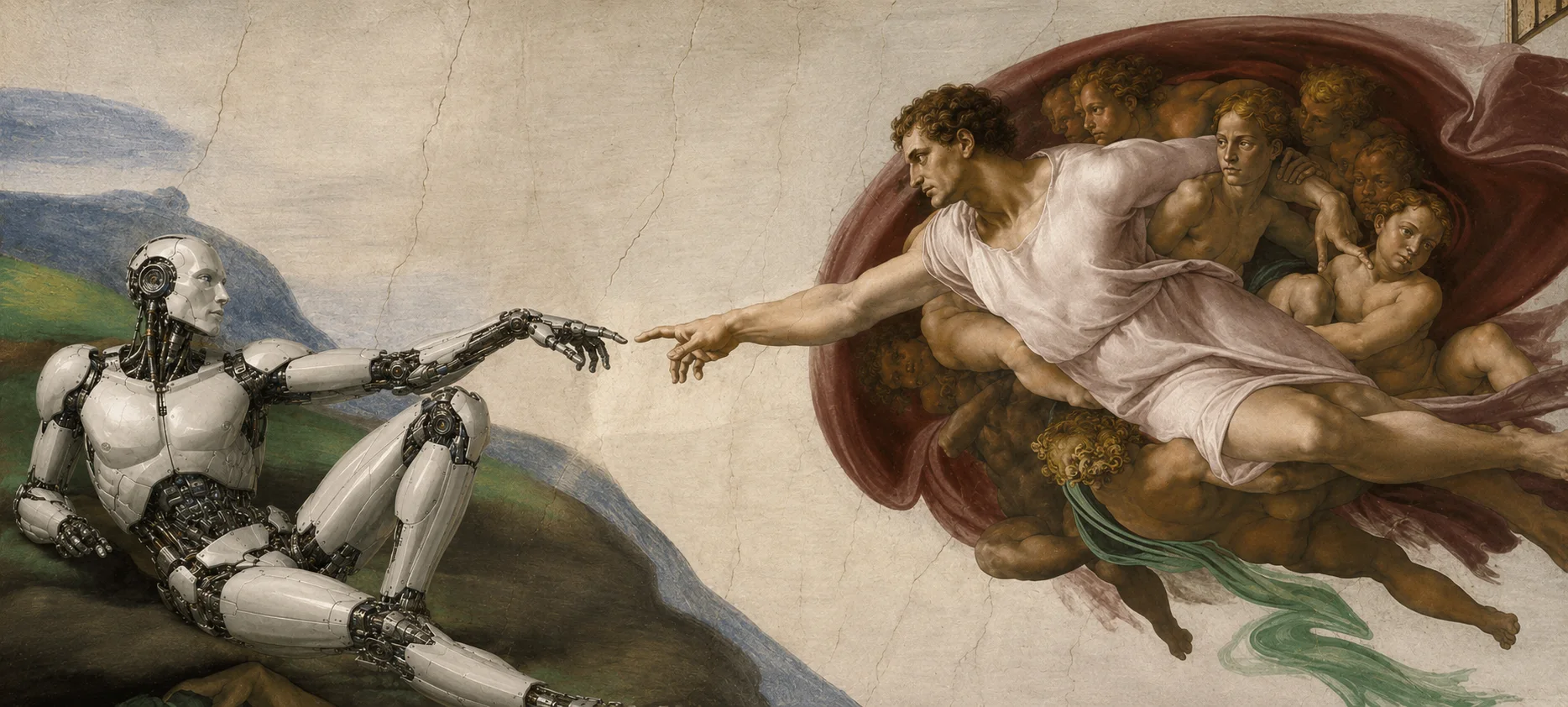

About Me
I’m an undergraduate student at Johns Hopkins University pursuing a triple major in Computer Science, Electrical Engineering, and Computer Engineering, with minors in Robotics and Visual Arts. I’m a researcher in the JHU Social Cognitive AI (SCAI) Lab, advised by Prof. Tianmin Shu and Prof. Alan Yuille. I’m also fortunate to work at MIT, advised by Prof. Josh Tenenbaum, Prof. Phillip Isola, and Prof. Vikash Mansinghka.
My research interest is to uncover the computational principles that fuse human-like visual perception with high-level cognitive reasoning and instantiate them in embodied AI systems that truly understand and interact with the real world. I’d like to design multi-modal models that blend vision with language-grounded probabilistic reasoning so agents can infer goals, causality, and affordances from sparse observations. By embedding these models in robots and photorealistic simulators, I aim to create agents that can plan, communicate, and collaborate with humans in open-ended environments.
Outside the lab, I enjoy traveling, playing polo, making visual art, and getting swept up in musical theatre. I once spent a month in Seville studying art history to wander through sunlit streets, look closely at paintings, and think about how people tell stories through images. Intelligence is not only something to model, but also something expressed through movement, color, music, and culture.
Cognition
Perception, social & physical reasoning, goals, causality, human-like inference.
Abstraction
Representations, concepts, programs, tools, predicates, planning.
World Models
Physical & social worlds, prediction, simulation, embodiment, interaction.
Learning &
Adaptation
Experience, exploration, model revision, self-play, continual improvement.
What should an intelligent system carry forward from experience, and when should it change?
Selected Publications
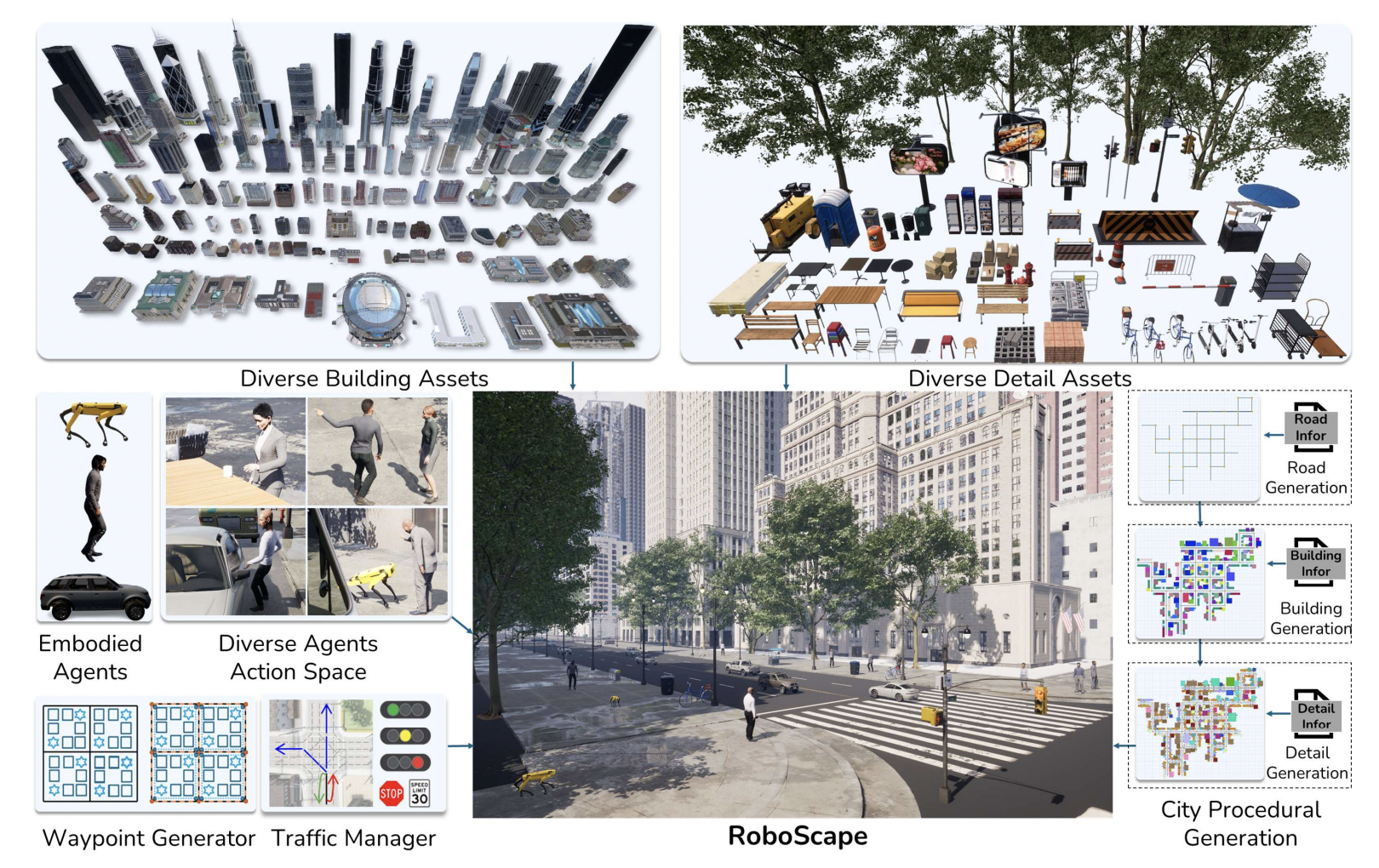
Yan Zhuang*, Jiawei Ren*, Xiaokang Ye*, Jianzhi Shen, Ruixuan Zhang, Tianai Yue, Muhammad Faayez, Xuhong He, Xiyan Zhang, Ziqiao Ma, Lianhui Qin, Zhiting Hu, Tianmin Shu
TL;DR
RoboScape uses Unreal Engine 5 to generate large-scale, photorealistic cities for multimodal navigation and multi-robot collaboration. Its benchmarks reveal that current vision-language models still struggle with the perception, spatial reasoning, planning, and communication required in dynamic urban environments.
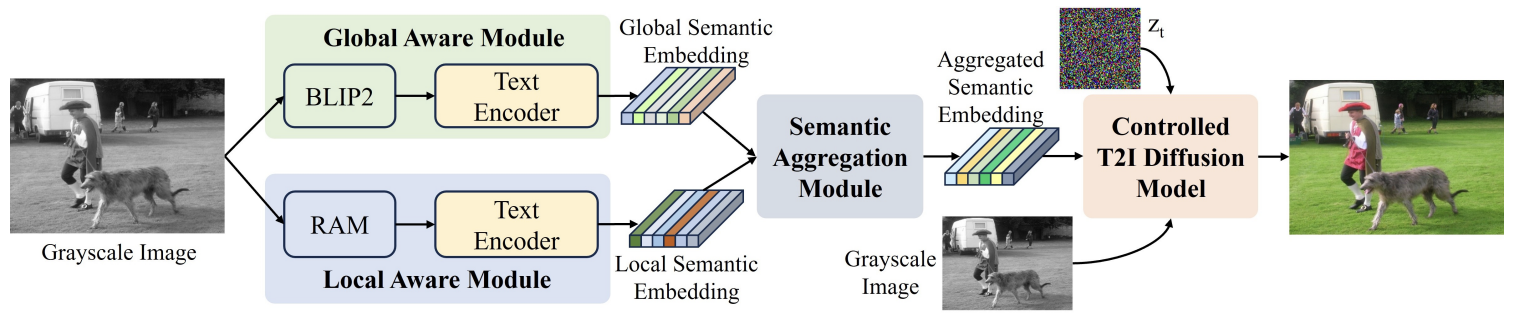
GoLoColor: Towards Global-Local Semantic Aware Image Colorization
Tianai Yue, Xiangcheng Du, Jing Liu, Zhongli Fang
TL;DR
GoLoColor combines global scene semantics with local object-level cues to guide diffusion-based image colorization, producing more coherent and realistic colors in scenes with multiple entities.
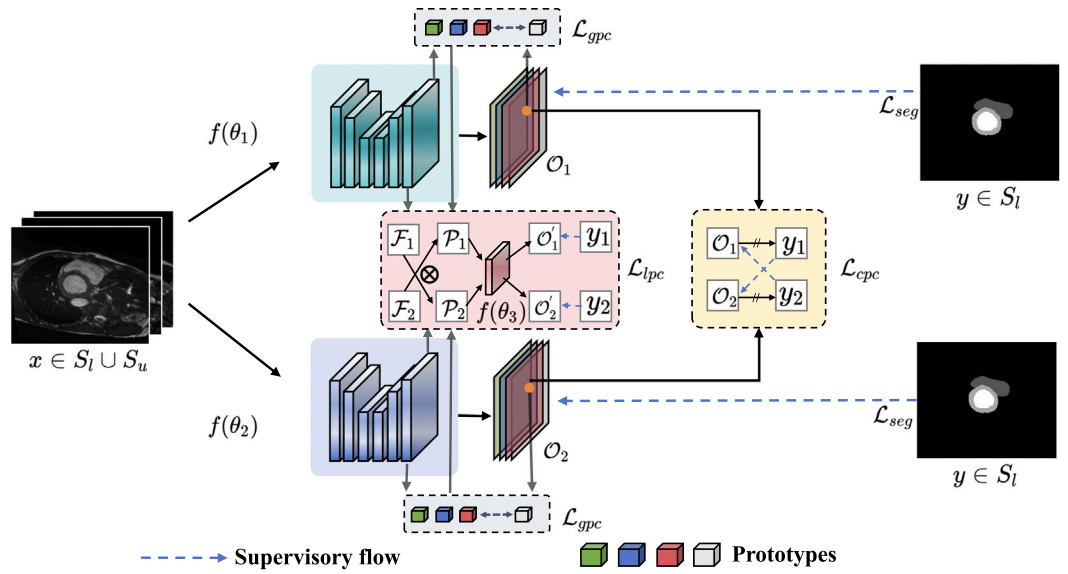
Tianai Yue, Rongtao Xu, Jingqian Wu, Wenjie Yang, Shide Du, Changwei Wang
TL;DR
A dual-prototype contrastive framework learns from scarce medical labels by aligning image-level foreground/background structure with pixel-level local representations. With only 10% labeled ACDC data, it reaches a 91.8 Dice score.
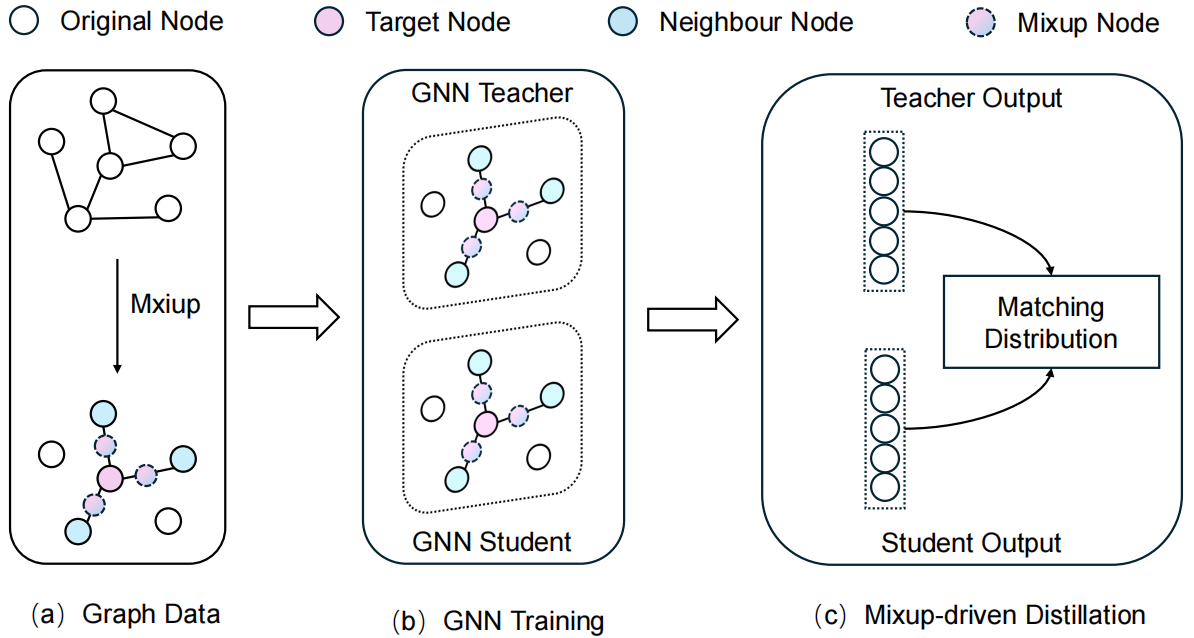
Enhancing Graph Neural Networks with Mixup-Based Knowledge Distillation
Tianai Yue, Jing Liu
TL;DR
MD-GNN combines feature-and-label Mixup with teacher-student distillation to improve graph learning without changing graph topology, yielding gains of 2.54–3.73% on Cora, CiteSeer, and PubMed with stronger robustness to noise.